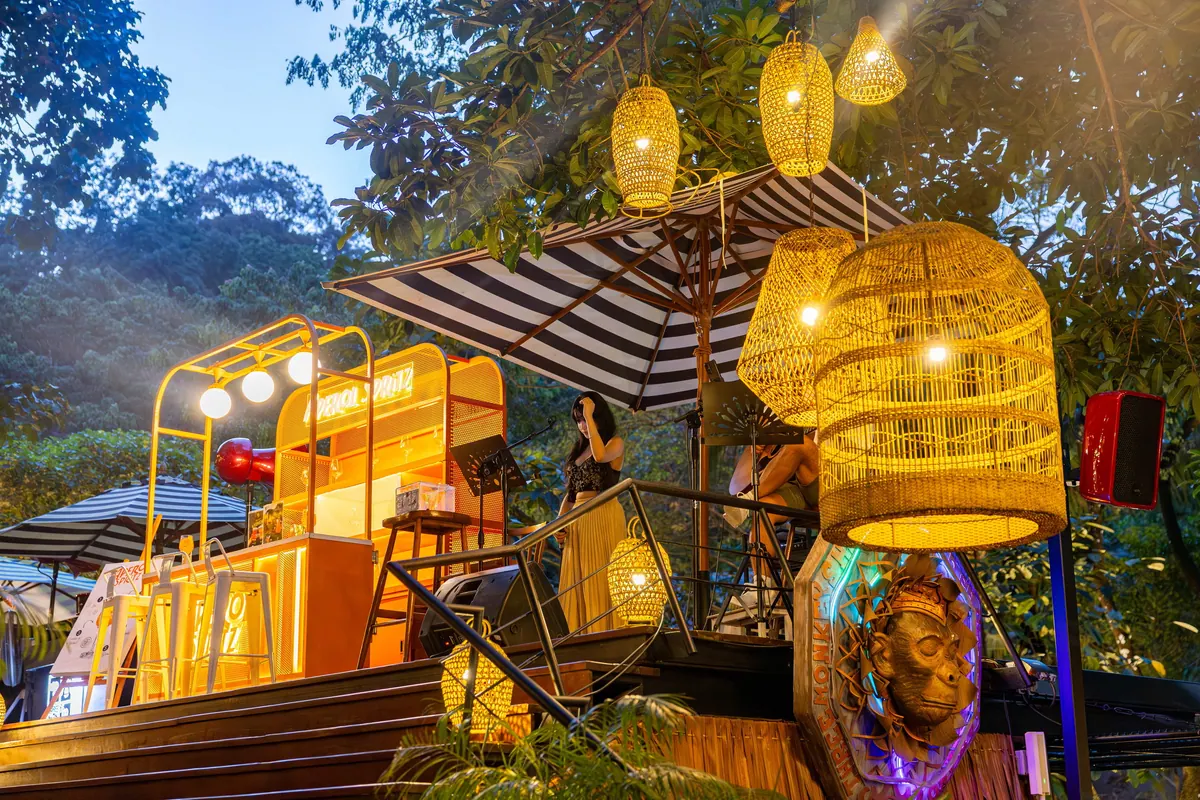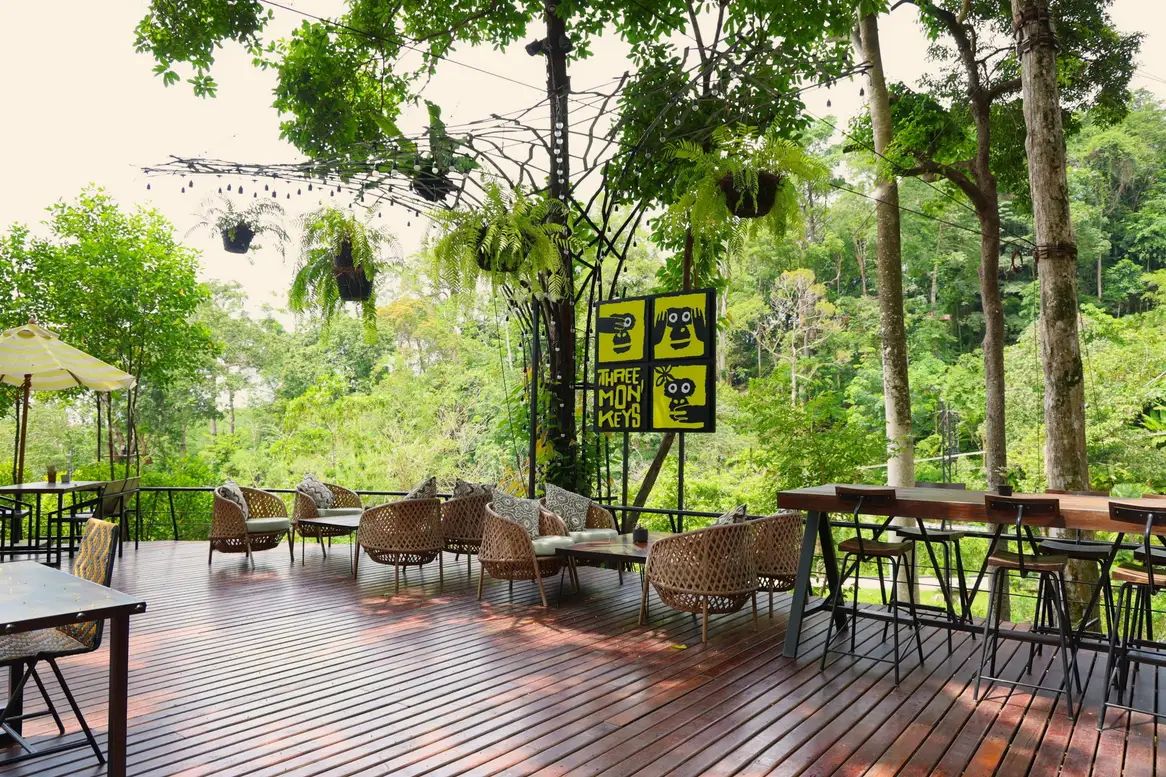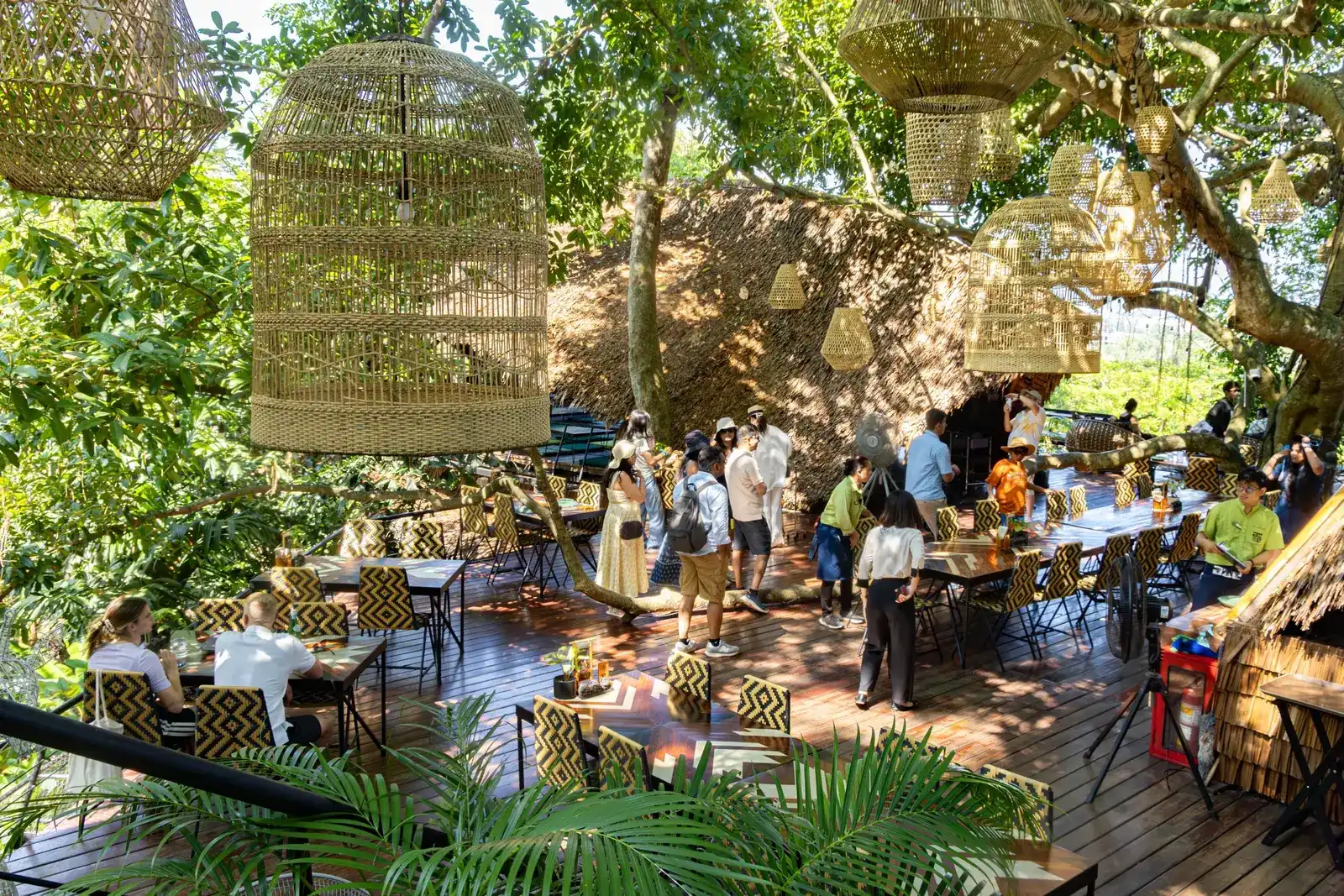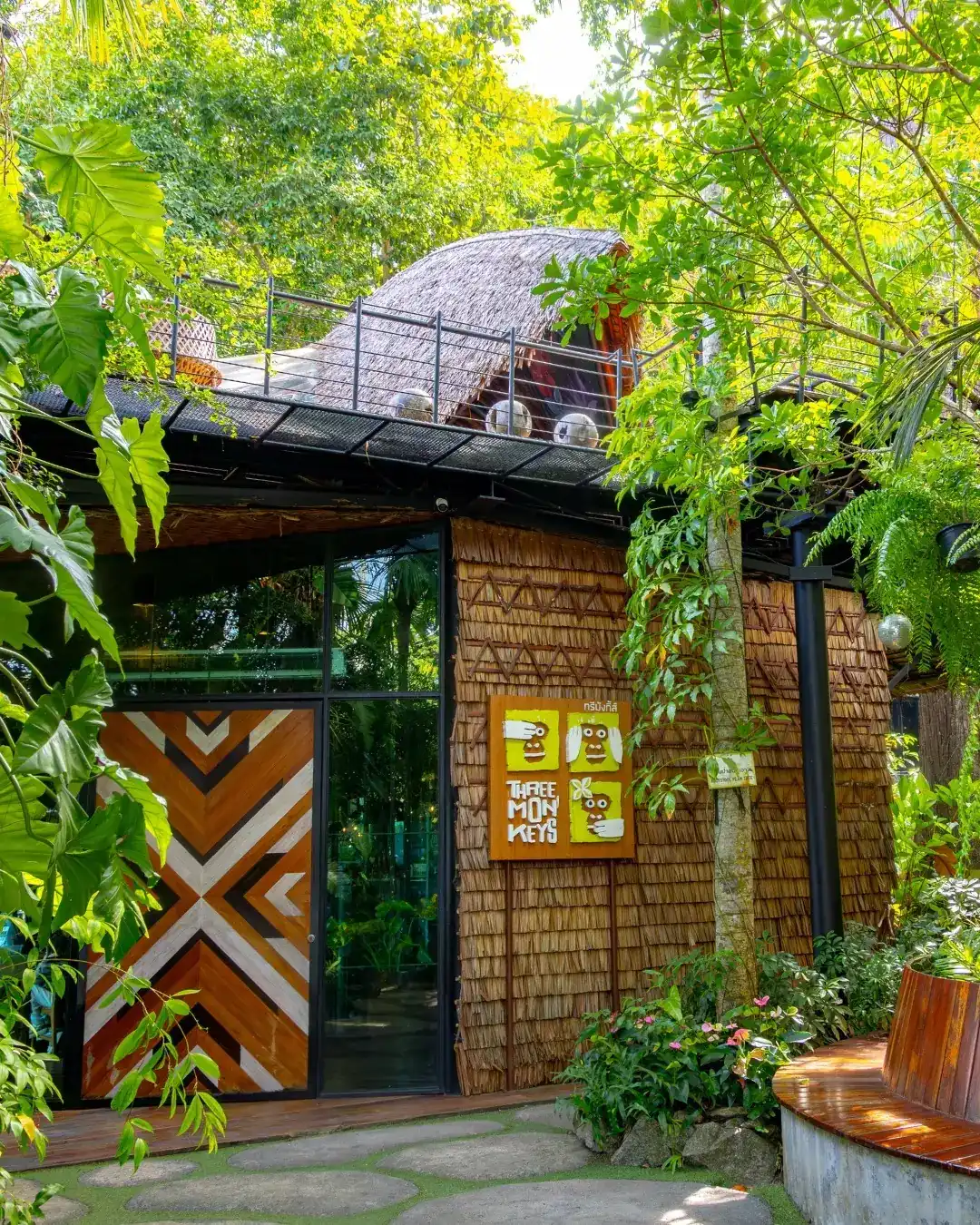
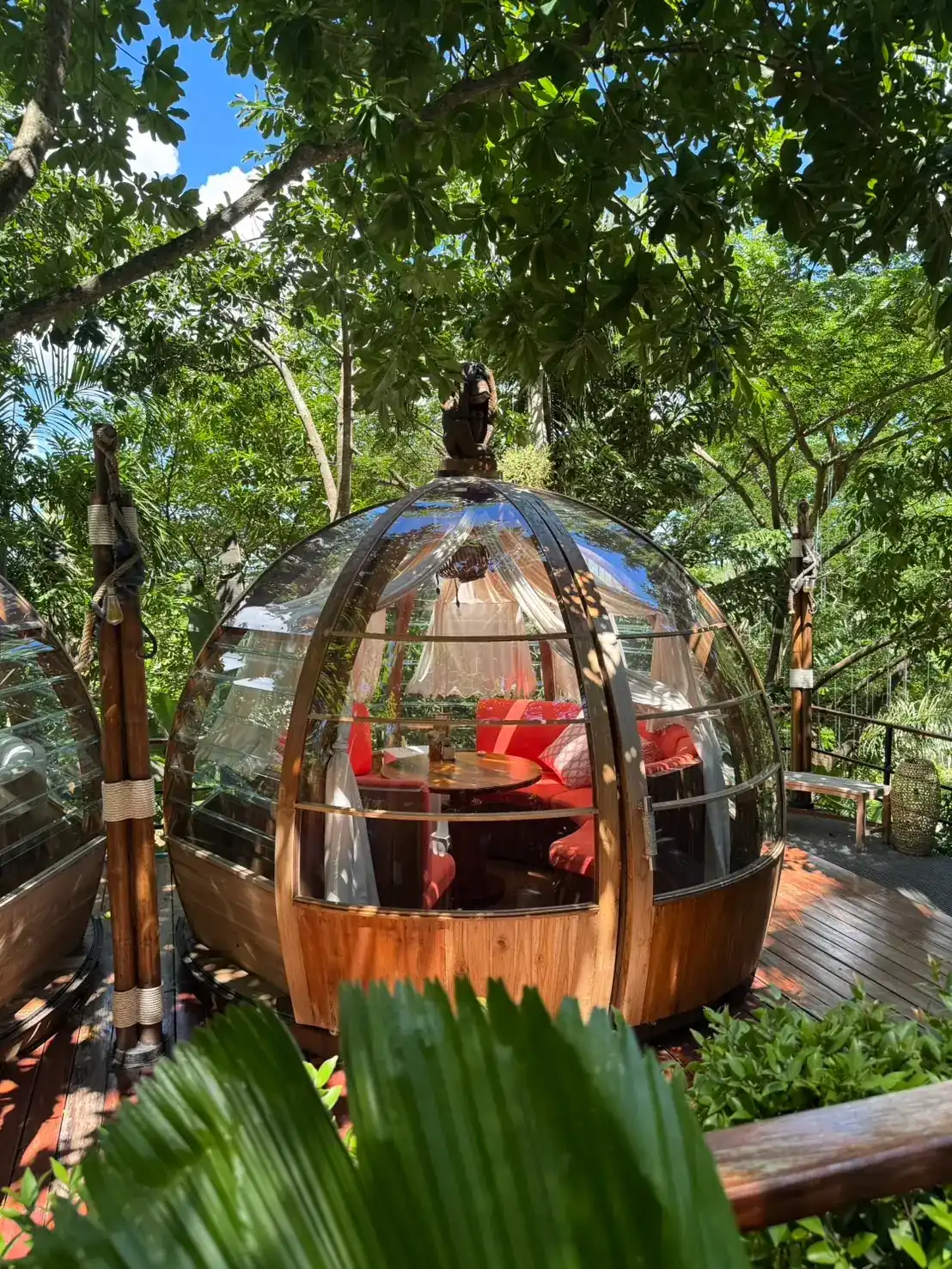
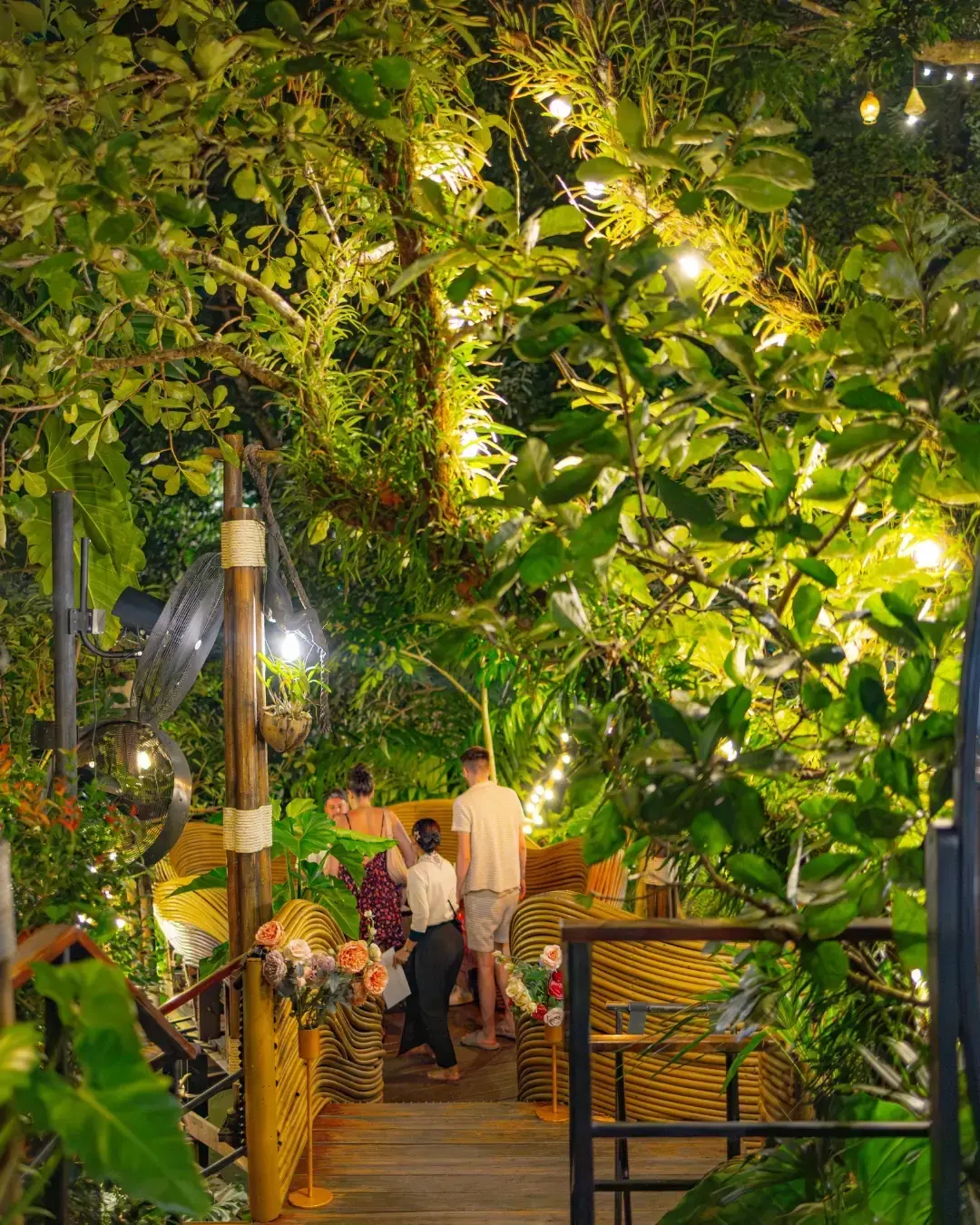
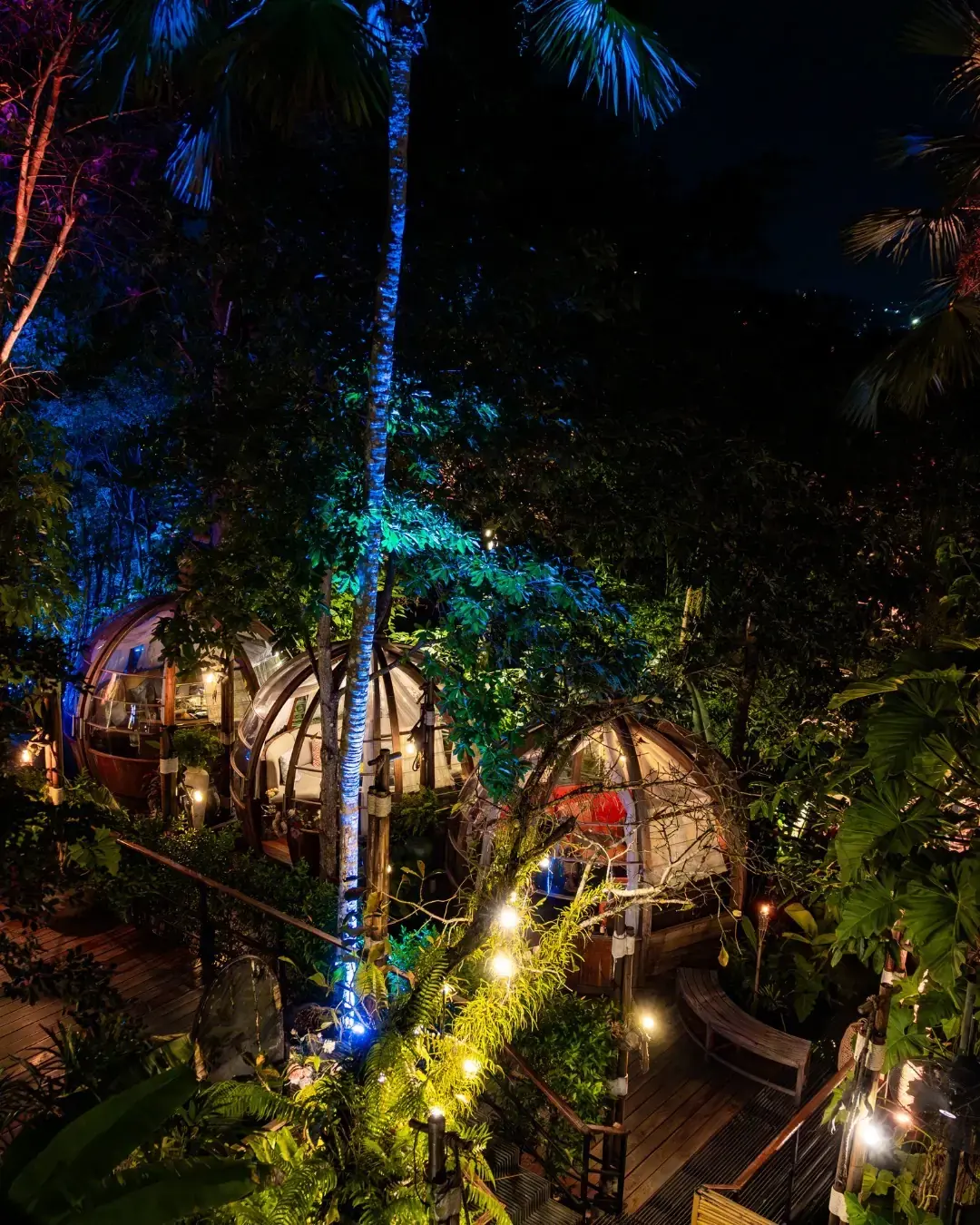
Three Monkeys Phuket photographs show more than one side of the restaurant: green trees around the buildings in daylight, rounded dining enclosures and warm lights among the seating areas at night. Those details give you a starting point for your own pictures. They do not mean you need to recreate every view or reserve a table only for its appearance.
For a dining visit, choose a view that shows the setting, a detail that catches your attention and a picture of the people or food at your own table. A few photographs leave more time for the meal and the people joining you.
Look for a detail, not just a wide view
A wide photograph can explain where you are, but it can also include more people and objects than you intended. Before taking it, look at the edges of the screen. A bag, a bright sign or another guest’s face may pull attention away from the subject. Change your framing from a place where you are allowed to stand, without stepping into someone else’s space.
The restaurant photographs show patterned doors, curved rooflines and wooden seating among the plants. Look for one element that interests you rather than trying to include all of them. A closer view can preserve a shape or texture that becomes hard to see in a photograph of the whole dining area.
Keep your position on the normal guest route. Do not climb, lean beyond a barrier or enter a planted area for an angle. If the picture would require access to another dining zone or an occupied table, ask the team whether it is possible. A clear route for guests and staff matters more than matching a reference photograph.
Let daylight and evening tell different stories
Daytime pictures in this guide show the greenery and building details clearly. Evening photographs put more emphasis on lamps, illuminated trees and darker spaces between them. Decide which look appeals to you, while choosing a reservation time that also suits the meal and your journey.
Light will not be identical to an earlier photograph. Weather, the direction you face and the lighting around your table can change the result. Treat the images as examples of the setting rather than a promise of the same conditions, empty background or exact view on your visit.
On a phone, tap the part of the scene you want to show clearly. If bright lamps lose their detail, try lowering the exposure slightly and compare the result. At night, hold the phone still for a moment after pressing the shutter, especially if it uses a night mode. Take a test picture of the setting before asking your companions to pose, so they are not waiting while you work out the light.
Keep table photographs brief
Ask the people dining with you whether they would like a photograph, and take it when they are comfortable. A quick picture before eating may suit some groups; others would rather settle in first. Avoid making someone wait with their food while you search for a different angle.
For a food photograph, clear only your own small area of the table. Move your phone or bag, leave plates where they can be reached comfortably and check that you are not blocking a server. A slightly angled view can show both the dishes and a little of the table setting. There is no need to stand on a chair or move hot dishes around for a picture.
When you share the photograph, describe what you actually ordered. A full spread in a restaurant image does not necessarily represent a set menu, a package or food included with a seat reservation. Use the current menu to check dish names, and keep any recommendation tied to your own order rather than another table’s meal.
Respect other guests and the space around you
Before photographing a wider scene, check whether people nearby would become the subject of your picture. Reframe where practical, and ask before taking a close portrait of someone outside your group. The same courtesy applies to staff who are working.
Keep sound, repeated takes and equipment from disrupting the tables around you. Avoid using a bright flash close to other diners. If a walkway is busy, wait for a clear moment instead of asking people to move for you. These small choices also tend to produce a calmer photograph.
A normal dining reservation should not be treated as permission for a commercial shoot, special equipment or access to every area. Contact the restaurant in advance if your plans involve a photographer, a tripod, extra lighting or an organised session. Describe the equipment, group size and intended use so the team can confirm what is possible; no particular photography arrangement is promised here.
Book for the meal you want to have
Use the seating page to choose a setting that fits your group, and confirm the actual arrangement before reserving. A photo of a particular seat does not establish that it will be available or accessible during your visit. If that seat is central to your plans, ask about it explicitly.
For questions about photography arrangements or a table, use the official contact details. You can then check reservation options with a clearer idea of what you need. Leave room for an unplanned detail you notice on the day: a roofline through the leaves, a lamp beside your table or a relaxed moment with the people you came to see.