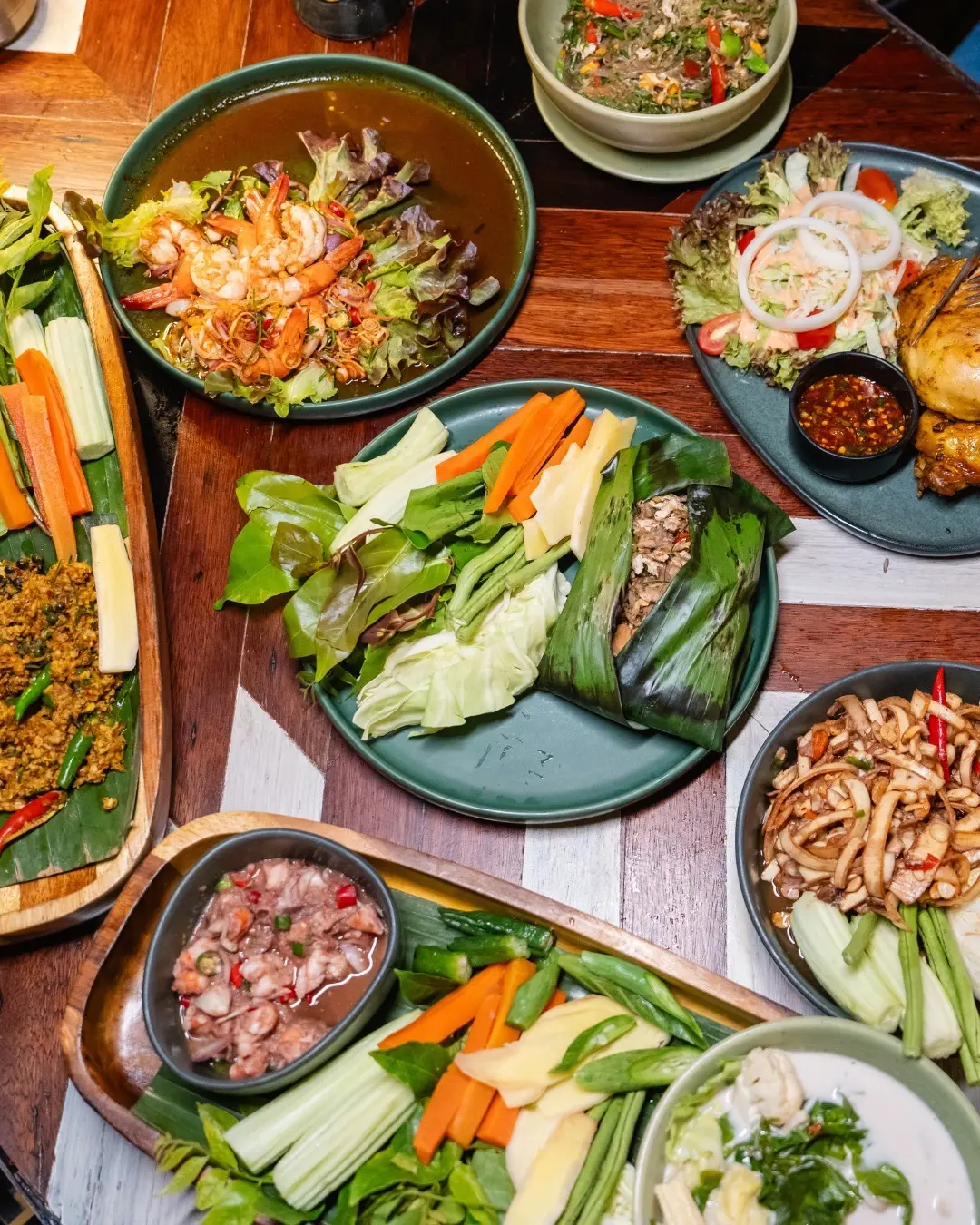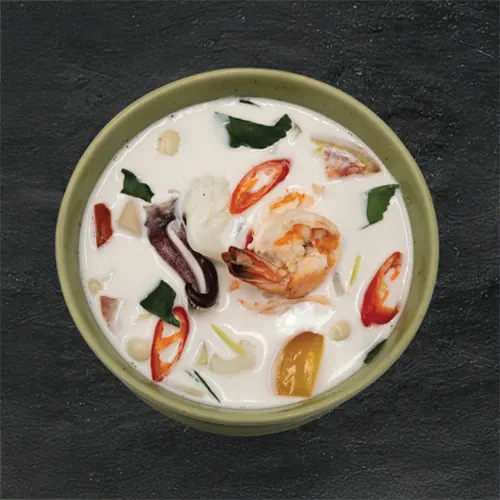
The Thai menu at Three Monkeys offers several different starting points for a soup order. Tom Yum Gung Seafood Spicy Sour Soup puts seafood and a sour, spicy profile in the name. Coconut Galanga Soup offers chicken, prawns or seafood. Other bowls combine coconut milk with prawns and local vegetables, while Herbal Sour Clear Soup uses sea bass belly.
Choose by the description and the ingredients you want, then ask the team about the current preparation and serving size. A familiar name helps you recognise a style, but it should not replace a conversation about spice, dietary requirements or how much food the table has already ordered. The live menu is the place to check current choices and prices.
Start with the flavour you want
For a table looking for a sharp, lively soup, read the Tom Yum entry first. Its menu name explicitly describes it as spicy and sour. If some diners prefer less heat, ask what can be adjusted before ordering. A request for less chilli should be confirmed for the actual dish, especially when the soup will be shared.
For a coconut-based option, compare the galanga soup with the other coconut milk soups rather than treating all of them as the same dish. The menu names point to different combinations of protein and vegetables. Choosing between them is partly about the ingredients you would enjoy alongside the other food on the table.
A coconut description does not automatically mean a dish is mild or suitable for a particular diet. Nor does a clear broth establish its full ingredient list. Ask about the stock, sauces and seasoning if those details matter to you. The visible ingredients in a photograph are only part of the preparation.
Read the protein options carefully
The coconut galanga soup entry lists chicken, prawns and seafood options. Make the choice explicit when ordering rather than simply saying the dish name. If your group has different preferences, decide whether to share one version or order separately after asking about portions.
Seafood is a broad description. Ask which seafood is used in the current dish if someone avoids a specific ingredient or simply wants to know what to expect. The restaurant can explain the available preparation; an article cannot guarantee a substitution or a particular ingredient on the day.
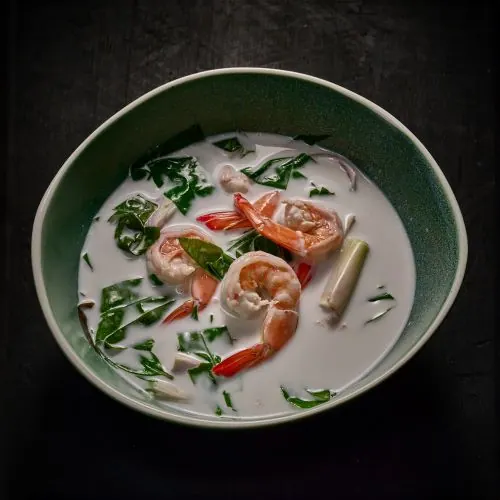
The menu also lists coconut milk soup with prawns and local vegetables, and a separate version with prawns, bitter green beans and coconut shoots. These are useful options to compare when you want to explore beyond the most familiar soup names. Read the whole title, because similar-looking coconut broths can have different main ingredients.
Consider a clear soup as another direction
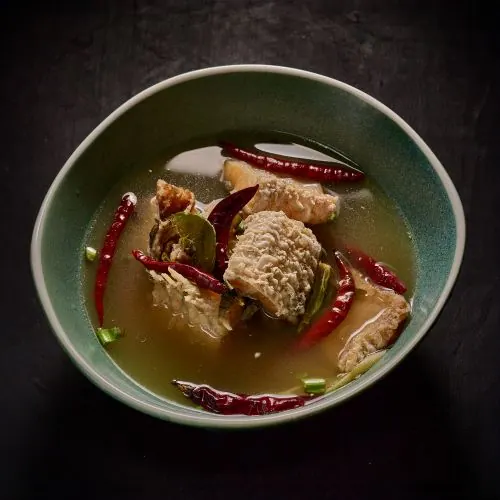
Herbal Sour Clear Soup With Sea Bass Belly appears separately from the coconut options. If you are choosing between a clear broth and a coconut-based bowl, ask the team how the flavours compare in the restaurant's current preparations. That question is more useful than assuming one is always lighter, less spicy or appropriate for everyone.
A fish soup also changes the balance of a meal that already includes a large seafood dish. Look across the whole order. You might want that repeated ingredient because you enjoy it, or you might prefer a different protein elsewhere for variety. There is no need to build the meal around a fixed rule; the aim is to order food your group will enjoy.
If a diner has a dietary restriction, make that clear before discussing alternatives. Choosing a different visible protein does not establish that the stock or seasoning meets the same requirement. Ask the team to check the dish as a whole.
Build the rest of the meal around the soup
Think about texture and flavour across the table. A soup can sit alongside rice and another dish with a different texture, rather than several bowls with very similar sauces. The menu includes rice, vegetables, salads and a range of mains, so there is room to build an order around your own preferences.
Ask how the soup is normally served and whether it suits the number of people sharing it. Photographs do not provide a reliable portion guide. Two people ordering soup with several other dishes will need a different amount from a group making it a central part of lunch.
Discuss timing as well as quantity. Tell the team whether you would like the soup as part of a shared meal or have a particular serving preference. Confirm what is practical during the service rather than assuming every dish will arrive in a precise sequence.
The broader first-visit food guide can help you put together the rest of the order. Keep the soup decision focused on the flavour and ingredients you want, then use the menu to choose complementary dishes.
Questions worth asking at the table
Which is the coconut galanga soup?
Look for Coconut Galanga Soup With Chicken / Prawns / Seafood on the Thai menu. It is a separate entry from the coconut milk soups with prawns and vegetables. Confirm your preferred protein when ordering.
Can I request a different spice level?
Explain your preference and ask what can be adjusted for the selected soup. Do not assume that the absence of the word spicy means there is no chilli in the preparation.
Does the soup include rice?
Check the current order details with the team. The menu has separate rice entries, so do not infer an inclusion from a serving photograph or from how a similar meal was presented elsewhere.
Is a coconut soup automatically suitable for my dietary requirement?
No single ingredient description settles that question. Ask about the complete dish, including stock, sauces, garnishes and preparation, before deciding whether to order it.
Browse the current food menu, note the soups you would like to compare and bring any ingredient questions to the team. If you also want a particular dining area, reserve your table separately from deciding what to eat.